Understanding Urban Change, Shaping Urban Change
The process of urbanisation in the early 21st century is enormously dynamic: Urban spaces emerge, grow and change, their transformation takes many forms and is increasingly discontinuous and disparate. A better understanding of these processes is a central concern for the spatial urban researchers at the ILS. We investigate the various dimensions of urban change at different levels of scale and in international comparison. In active dialogue with practitioners, policy-makers and societal stakeholders, we gain important insights from this for the sustainable transformation and design of urban spaces.
We have these main research interests.
The process of urbanisation in the early 21st century is enormously dynamic: Urban spaces emerge, grow and change, their transformation takes many forms and is increasingly discontinuous and disparate. A better understanding of these processes is a central concern for the spatial urban researchers at the ILS. We investigate the various dimensions of urban change at different levels of scale and in international comparison. In active dialogue with practitioners, policy-makers and societal stakeholders, we gain important insights from this for the sustainable transformation and design of urban spaces.
We have three main research interests.
News
8. DOKORP 2027 – Call for Abstracts und Roundtables geöffnet
Für die Dortmunder Konferenz Raum- und Planungsforschung 2027 vom 22. bis 25. Februar 2027 zum Thema „Generative KI, maschinelles Lernen, virtuelle Welten – Chancen, Risiken und Implikationen der fortschreitenden Digitalisierung für die Planung der Zukunft“ wurde der Call for Abstracts und Roundtables geöffnet. Einreichungsfrist ist der 15. September 2026. Mehr…
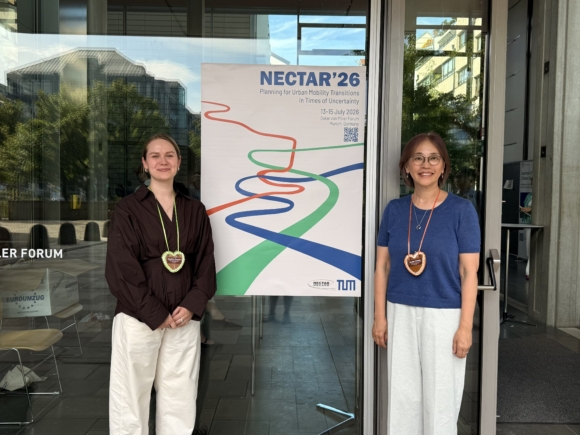
ILS researchers at NECTAR’26
The 18th conference of the “European Communications and Transport Activities Research” network took place this year at the Technical University of Munich. Angelina Atanova and Prof. Dr Noriko Otsuka gave presentations. Angelina Atonova’s topic was about her dissertation project “Temporary and permanent street redesigns: Shaping public acceptance and mobility behaviours through reversibility and participation”. Prof. Dr Noriko Otsuka spoke in a session on “The impact of accessibility to green and blue spaces on human mental health and well-being in advancing Green Care”. More…
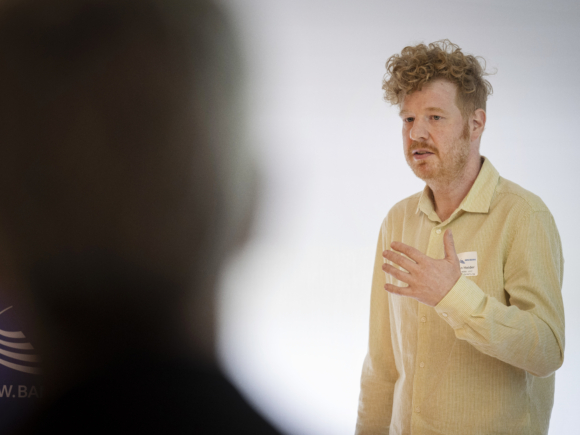
Fachdialog zur nachhaltigen Transformation setzt Impulse für zukünftige Kooperationen
Welchen Beitrag leistet die Wissenschaft zur nachhaltigen Transformation in Nordrhein-Westfalen? Zu dieser Frage diskutiert die Zukunftskonferenz NRW. Bei einem Fachdialog in der NRW.BANK standen jetzt aktuelle Herausforderungen und Fördermöglichkeiten im Mittelpunkt. ILS-Wissenschaftler Dr. Bastian Heider gab im Themenboard Klimaanpassung einen Input mit Ergebnissen aus unserem Projekt CATCH4D. Mehr…
Dr. Michael Kolocek zu Gast beim WDR 5 Tagesgespräch
ILS-Wissenschaftler Dr. Michael Kolocek war am 10. Juli zu Gast beim WDR5 Tagesgespräch. Es ging vor allem um die Entscheidung der Stadt Dortmund in bestimmenten Bereichen das Betteln zu verbieten. Ist das Verbot sinnvoll oder nicht? Michael Kolocek regt an, dass lokale Verbote von bestimmten Nutzungen häufig dazu führen, dass sich diese Nutzungen dann auf andere Ort verlagern. Langfristig sinnvoller wäre, sich mit den Bedürfnissen und Problemen der Bettelnden intensiver zu befassen Er plädiert für eine gründliche Auswertung der Wirkungen des Verbots nach einem Jahr. Es haben sich Hörer*innen in die Live-Sendung gemeldet. Sie konnten Fragen stellen und ihre persönlichen Erfahrungen schildern. Zur Aufzeichnung
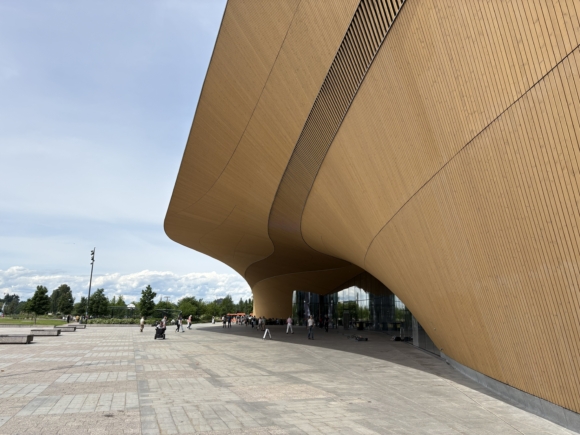
World Planning Schools Congress: Peripheral Visions – Rethinking Planning
As cities navigate economic growth, the climate crisis, political extremism, and geopolitical tensions, is spatial planning losing ground to other local and national policy priorities? This was the central question discussed at the World Planning Schools Congress, held in Helsinki, Espoo and Tampere (Finland) from June 29 to July 3, 2026. Seven researchers from ILS were part of the program. More…
Publications

Walking in urban neighbourhoods − Insights from a mixed methods approach and citizen science in walkability research
ILS researchers Noriko Otsuka, Janina Welsch, and Anna-Lena van der Vlugt, in collaboration with colleagues, have published an article in the journal “Transportation Research Interdisciplinary Perspectives”. The article examines the complexity of walkability in three European cities based on the WalkUrban project. It focuses on the innovative citizen science method based Walking Route Assessment. The citizen-science led method played an important role in highlighting the areas for improving urban walkability, with photographic evidence. Cross-examination with the results from other methods (i.e. spatial modelling, household survey and walk-along interviews) provided deeper insights into people’s perceptions of their walking environment and routes on a neighbourhood scale. https://doi.org/10.1016/j.trip.2025.101588. Further current selected papers can be found here.

Large-scale resettlements in the face of solastalgia and solatium – The roller coaster ride of property rights in the Rhenish lignite mining area
ILS-researcher Michael Kolocek has published a paper in the journal “Cities”. The article summarizes the main findings of the Z³ research project („Zusammenhalthochdrei“) from the perspective of property rights theory. The study focuses on the land acquisition process in several affected villages and how residents were compensated for their losses. It critically evaluates whether the principle of social compatibility achieved its intended goals. The situation in these areas is unique, as some villages initially designated for removal were later spared due to revised mining plans. Two theoretical concepts are discussed: solastalgia, which describes the relationship between ecosystem health and human well-being and explaining the psychological impact of these turbulent experiences; and solatium, an international concept used to compensate for emotional distress and pain caused by losing one’s home. Although solatium does not exist in German law, the paper shows how stakeholders sought to mitigate economic and emotional harm through an innovative compensation approach combined with participatory measures. https://doi.org/10.1016/j.cities.2025.106273. Further current selected papers can be found here.

Framing the relationship between justice and ecosystem services: A systematic review
ILS researcher Barbara Schröter, in collaboration with several colleagues, has published an article in the journal “ecosystem services”. The article covers how justice is conceptualized in ecosystem services research. They identified five different framings, that each render different (in)justices (in)visible. The diversity of framings emphasizes the importance of considering multiple perspectives on justice. https://doi.org/10.1016/j.ecoser.2025.101755. Further current selected papers can be found here.
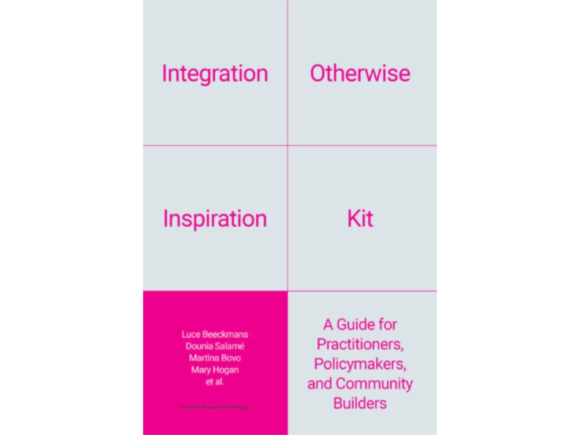
Integration Otherwise Inspiration Kit. A Guide for Practioners, Policymakers and Community Builder
Within the Horizon 2020 Project ReRoot, Cornelia Tippel, ILS-Scientist within the research group „Urban Social Space“ has co-authored the „Integration Otherwise Inspiration Kit“. The publication is a practical guidebook that centers bottom-up approaches on integration and moves beyond polarizing debates of newcomers failing to integrate or blames society as insufficiently welcoming. The authors introduce the concept of „arrival infrastructuring“, the interactive process through which newcomers, together with others, actively shape and transform their arrival situations. Through stories from the ground with concise takeaways, alongside tools for reflection and action, this guide equips practitioners, policymakers and community builders with a deeper understanding of the diverse forms of arrival infrastructuring, as well as the successes and challenges of everyday integration processes. https://doi.org/10.11116/9789461666758. Further current selected papers can be found here.
Maintaining mobility of older people in urban areas in the face of climate change. Empirical findings on percieved heat stress and potential adaptive behavior
ILS-Researcher Kerstin Conrad has published a paper in the journal “Zeitschrift für Gerontologie und Geriatrie” in collaboration with Susanne Penger from the University of Siegen. The article covers the perception of extreme heat by elderly people. It covers the results of a survey of 211 persons aged 65 to 92 years in Stuttgart. A cluster of vulnerability factors was discovered, which led to a strong reduction in out-of-home activities during high perceived heat stress. This reinforces the necessity of targeted heat protection and prevention measures in local heat action schemes. https://doi.org/10.1007/s00391-025-02456-y. Further current selected papers can be found here.
Events
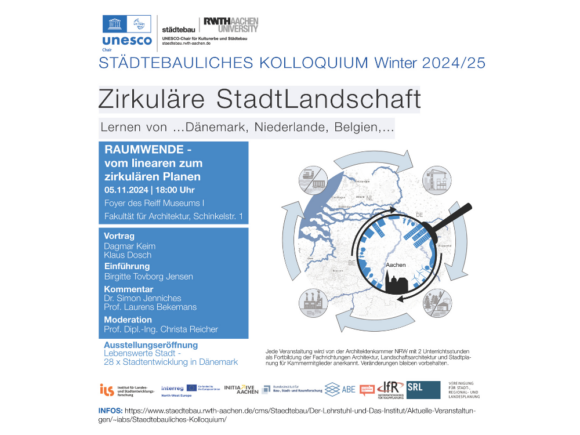
Zirkuläre StadtLandschaft – Lernen von … Dänemark, Niederlande, Belgien, …
Die diesjährige Winterausgabe des Städtebaulichen Kolloquiums zieht Lehren zum räumlichen Umgang unserer europäischen Nachbarn beim Thema Zirkuläres Wirtschaften. Die zweite Veranstaltung des dreiteiligen Kolloquiums beschäftigt sich mit dem Thema „KLIMASCHUTZ – vom Mehrwert der Zirkularität“ und findet am 10. Dezember um 18:00 im Foyer des Reiff Museums in Aachen statt. ILS-Wissenschaftlerin Ann-Kristin Steines referiert dort zu „Innovativen Systemen der kreislaufbasierten Agrarproduktion“. Mehr…
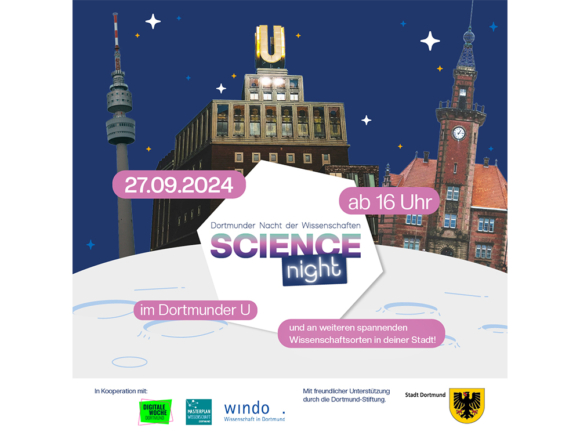
ILS bei der Science Night in Dortmund
Am 27. September startet die erste „Science Night – Die Dortmunder Nacht der Wissenschaft“ um 16 Uhr. Dort werden die zahlreichen Facetten der Dortmunder Wissenschaft präsentiert. 40 Einrichtungen und Akteur*innen öffnen ihre Türen und präsentieren ihre Arbeit. Das ILS wird im Foyer des U-Turms mit einem Multi-Touch-Tisch zum Thema „Agrarsysteme der Zukunft“ zu finden sein: Unkrautroboter, virtuelle Zäune für Kühe, Quallen und Algen auf dem Teller- dies und vieles mehr gibt es zu dort zu entdecken. Außerdem beteiligt sich das ILS an einer Führung durch die Dortmunder Nordstadt mit dem Schwerpunkt „Ankunftsquartiere“. Ankommen und Bleiben in Dortmund. Zum Programm
DOKORP 2025 – Submission deadline extended for Call for Abstracts
The submission deadline for Call for Abstracts & Roundtables has been extended until October 7, 2024 for the Dortmund Conference on Spatial and Planning Research 2025 from February 10 to 12, 2025 on the topic “Reason to Plan in Times of Multiple Crises”. More…
Abschlussveranstaltung: Digitalisierung und Nachbarschaft – Sind wir schon drin?
Wie verändert die Digitalisierung das Zusammenleben in unseren Nachbarschaften? Unter dieser Fragestellung setzte sich das von der Stiftung Mercator geförderte Forschungsprojekt „Bin ich schon drin?“ mit den Formen digitalen sozialen Zusammenhalts auseinander. Die Ergebnisse des Projekts werden auf der Abschlusstagung am 10. September 2024 in Essen vorgestellt. Mehr…
24. Konferenz für Planerinnen und Planer NRW: Programm veröffentlicht
Am 31. Oktober 2024 findet unter dem Titel „(Neue) Flächenansprüche und die Flächenwende“ die 24. Konferenz für Planerinnen und Planer NRW bei der NRW.BANK in Düsseldorf statt. Das Programm der Konferenz ist nun fertiggestellt und veröffentlicht. Auch die Anmeldung ist ab sofort möglich. Mehr…