Understanding Urban Change, Shaping Urban Change
The process of urbanisation in the early 21st century is enormously dynamic: Urban spaces emerge, grow and change, their transformation takes many forms and is increasingly discontinuous and disparate. A better understanding of these processes is a central concern for the spatial urban researchers at the ILS. We investigate the various dimensions of urban change at different levels of scale and in international comparison. In active dialogue with practitioners, policy-makers and societal stakeholders, we gain important insights from this for the sustainable transformation and design of urban spaces.
We have these main research interests.
The process of urbanisation in the early 21st century is enormously dynamic: Urban spaces emerge, grow and change, their transformation takes many forms and is increasingly discontinuous and disparate. A better understanding of these processes is a central concern for the spatial urban researchers at the ILS. We investigate the various dimensions of urban change at different levels of scale and in international comparison. In active dialogue with practitioners, policy-makers and societal stakeholders, we gain important insights from this for the sustainable transformation and design of urban spaces.
We have three main research interests.
News
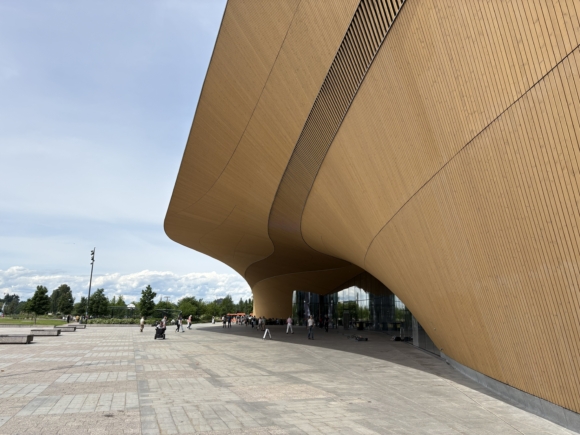
World Planning Schools Congress: Peripheral Visions – Rethinking Planning
As cities navigate economic growth, the climate crisis, political extremism, and geopolitical tensions, is spatial planning losing ground to other local and national policy priorities? This was the central question discussed at the World Planning Schools Congress, held in Helsinki, Espoo and Tampere (Finland) from June 29 to July 3, 2026. Seven researchers from ILS were part of the program. More…
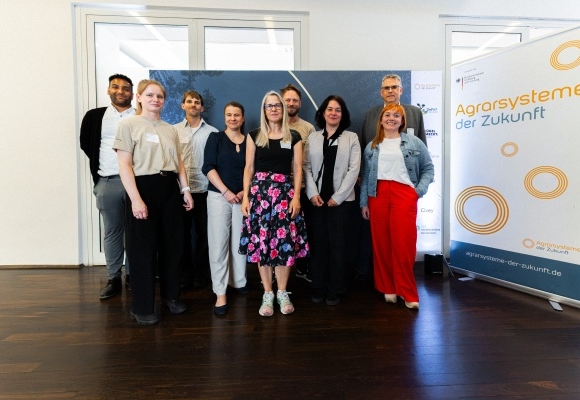
Alternative Proteine brauchen funktionierende Wertschöpfungsnetzwerke: Agrarsysteme der Zukunft zeigen innovative Wege zu resilienten Agrar- und Ernährungssystemen
Wie können Agrar- und Ernährungssysteme angesichts von Klimawandel, geopolitischen Konflikten, Lieferkettenrisiken und wachsendem Innovationsdruck resilient gestaltet werden? Die ersten Tagesspiegel Background Fachkonferenz Agrar & Ernährung am 7. Juli widmete sich dieser Frage im Tagesspiegel-Haus in Berlin. Unter dem Leitthema „Gesund und sicher versorgt? Landwirtschaft, Politik und Handel im Stresstest“ diskutierten Vertreter:innen aus Politik, Wissenschaft, Wirtschaft, Verbänden und Zivilgesellschaft über Strategien für eine zukunftsfähige Agrar- und Ernährungspolitik. Die Fördermaßnahme «Agrarsysteme der Zukunft» brachte ihre Expertise mit einem Fachworkshop zu alternativen Proteinen, einem Impulsvortrag sowie innovativen Exponaten aus zwei Forschungskonsortien in die Konferenz ein. Zum Bericht
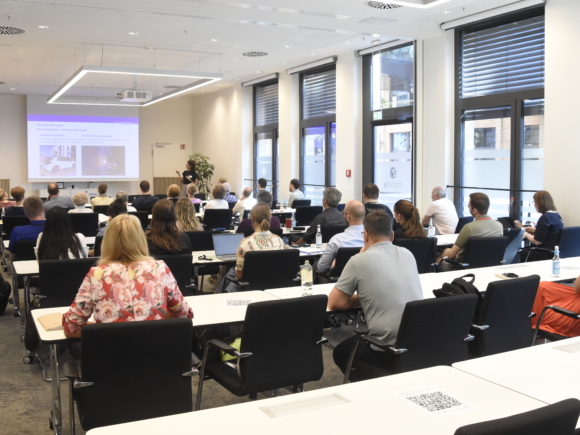
Abschlussveranstaltungen im Projekt NaMoLi III
Wie lassen sich quartiersbezogene Mobilitätskonzepte langfristig verstetigen, welche Wirkung entfalten sie und wie werden sie zum Planungsstandard? Diese Fragen standen im Zentrum der Abschlussveranstaltung von NaMoLi III „Nachhaltige Mobilität in der Lincoln-Siedlung und darüber hinaus?“ Mitte Juni in Köln – organisiert von der ILS Research. Hanna Wagener (Wissenschaftsstadt Darmstadt), Isabelle Hirschmann (HEAG mobilo), Simon Werschmöller, Marcus Klein (Goethe-Universität Frankfurt) und Annika Schröder (ILS Research) stellten spannende Ergebnisse aus Praxis und Forschung vor. Im Fokus stand zum Beispiel, wie Stadt und Mobilitätsdienstleister das Mobilitätsmanagement im Quartier dauerhaft gemeinsam organisieren. Mehr…
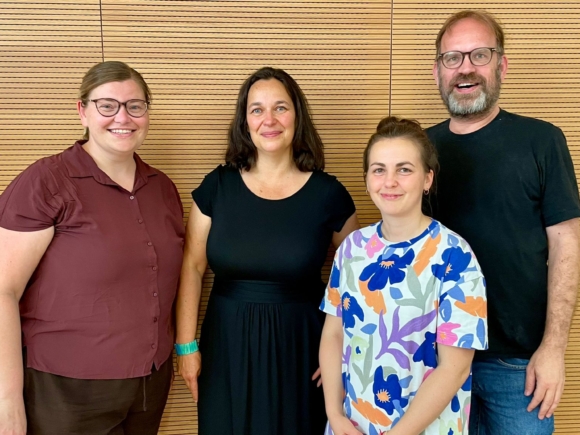
Jahrestagung der Arbeitskreise Mobilität und Verkehr und Geographische Einzelhandelsforschung der Deutschen Gesellschaft für Geographie
Auf der gemeinsamen Jahrestagung der Arbeitskreise Mobilität und Verkehr (AK MoVe) und Geographische Einzelhandelsforschung der Deutschen Gesellschaft für Geographie, die am 25. und 26. Juni an der RWTH Aachen stattfand, war das ILS mit gleich drei Beiträgen vertreten. Darüber hinaus wurde Thomas Klinger, Leiter der Forschungsgruppe Mobilität und Raum am ILS, in das Team der Sprecher*innen des AK MoVe gewählt. Er vertritt den Arbeitskreis künftig gemeinsam mit Claudia Hille (HKA Karlsruhe), Henrike Rau (LMU München) und Sina Steele (Goethe-Universität Frankfurt am Main). Mehr…
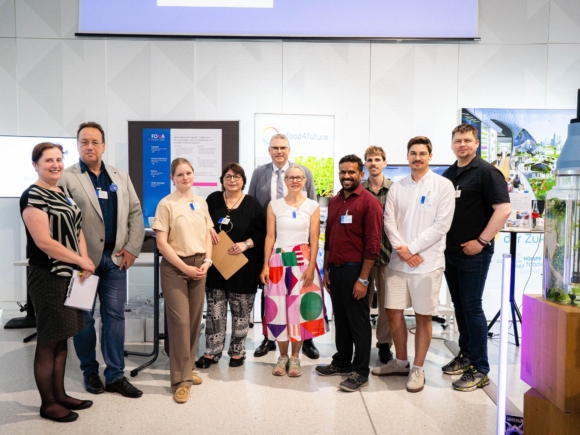
Pressemitteilung – Agrarsysteme der Zukunft beim FONA-Forum 2026: Forschung für nachhaltige Transformation
Wie gelingt es, Forschung schneller in die Anwendung zu bringen? Beim FONA-Forum 2026 zeigten die “Agrarsysteme der Zukunft”, wie innovative Technologien, interdisziplinäre Forschung und gesellschaftlicher Dialog dazu beitragen, nachhaltige Agrar- und Ernährungssysteme zu gestalten. Vertreter*innen aus Wissenschaft, Politik, Wirtschaft und Zivilgesellschaft kamen zusammen, um über die Zukunft der Nachhaltigkeitsforschung und den Transfer wissenschaftlicher Erkenntnisse in die Praxis zu diskutieren. Anlass des Forums war der Start der Umsetzung der neuen FONA-Strategie des Bundesministeriums für Forschung, Technologie und Raumfahrt (BMFTR), mit der Forschung für Nachhaltigkeit als integrierte Forschungs- und Innovationsstrategie bis 2030 weiterentwickelt wird. Zur Pressemitteilung
Publications

Deep Water Ports as a Trigger for Ongoing Land Use Conflicts? The Case of Jade Weser Port in Germany
Thomas Weith, head of the research group “Spatial Planning and Urban Design”, in collaboration with Roni Susman from ZALF, has published an article in the journal LAND. Based on the ReGerecht project, the article examines conflicts of use along Jade Weser Port. The focus is on the question of how large-scale infrastructure projects are embedded in ecologically sensitive coastal areas and what spatial conflicts arise as a result. Satellite images, planning documents, and implementation measures were used to analyse land use changes between 1970 and 2015. The results show that the growing demand for land for port-related infrastructure creates conflicts in limited spatial resources and competes with nature conservation and other land use demands. A lack of coordination between infrastructure planning and integrated coastal zone management (ICZM) is further exacerbating the conflicts. The study highlights the need for coherent, interdisciplinary planning approaches to sustainable development in coastal regions. https://doi.org/10.3390/land14102009. Further current selected papers can be found here.
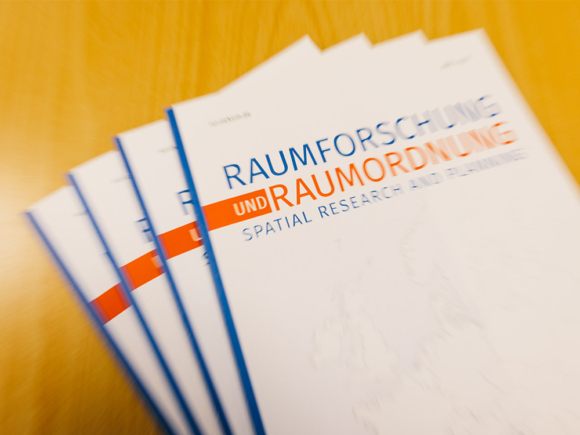
For a housing debate that seeks land where it is needed. A commentary on the InWIS study “Housing Construction needs (more) land”
ILS researchers Sebastian Eichhorn und Angelika Münter have published a joint expert commentary in the journal “Raumforschung und Raumordnung | Spatial Research and Planning” together with colleagues from the German Institute of Urban Affairs (Difu) and the Leibniz Institute of Ecological Urban and Regional Development (IÖR). This commentary addresses the findings of the study “Housing Construction Needs (More) Land”, published by Institute for Housing, Real Estate, Urban and Regional Development (InWIS) at the Ruhr University Bochum and EBZ Business School Bochum on June 18, 2025, and criticizes the blanket demand for more and more building land as short-sighted. Instead, land for housing construction should be sought on a small scale and where it is actually needed. The entire article is available under the following DOI: https://doi.org/10.14512/rur.3425. Further current selected papers can be found here.

Walking in urban neighbourhoods − Insights from a mixed methods approach and citizen science in walkability research
ILS researchers Noriko Otsuka, Janina Welsch, and Anna-Lena van der Vlugt, in collaboration with colleagues, have published an article in the journal “Transportation Research Interdisciplinary Perspectives”. The article examines the complexity of walkability in three European cities based on the WalkUrban project. It focuses on the innovative citizen science method based Walking Route Assessment. The citizen-science led method played an important role in highlighting the areas for improving urban walkability, with photographic evidence. Cross-examination with the results from other methods (i.e. spatial modelling, household survey and walk-along interviews) provided deeper insights into people’s perceptions of their walking environment and routes on a neighbourhood scale. https://doi.org/10.1016/j.trip.2025.101588. Further current selected papers can be found here.

Large-scale resettlements in the face of solastalgia and solatium – The roller coaster ride of property rights in the Rhenish lignite mining area
ILS-researcher Michael Kolocek has published a paper in the journal “Cities”. The article summarizes the main findings of the Z³ research project („Zusammenhalthochdrei“) from the perspective of property rights theory. The study focuses on the land acquisition process in several affected villages and how residents were compensated for their losses. It critically evaluates whether the principle of social compatibility achieved its intended goals. The situation in these areas is unique, as some villages initially designated for removal were later spared due to revised mining plans. Two theoretical concepts are discussed: solastalgia, which describes the relationship between ecosystem health and human well-being and explaining the psychological impact of these turbulent experiences; and solatium, an international concept used to compensate for emotional distress and pain caused by losing one’s home. Although solatium does not exist in German law, the paper shows how stakeholders sought to mitigate economic and emotional harm through an innovative compensation approach combined with participatory measures. https://doi.org/10.1016/j.cities.2025.106273. Further current selected papers can be found here.

Framing the relationship between justice and ecosystem services: A systematic review
ILS researcher Barbara Schröter, in collaboration with several colleagues, has published an article in the journal “ecosystem services”. The article covers how justice is conceptualized in ecosystem services research. They identified five different framings, that each render different (in)justices (in)visible. The diversity of framings emphasizes the importance of considering multiple perspectives on justice. https://doi.org/10.1016/j.ecoser.2025.101755. Further current selected papers can be found here.
Events

Raumwissenschaftliches Kolloquium 2025
“Zu viel des Wandels? Widersprüche und Aufbrüche in der sozial-ökologischen Transformation” unter dieser Überschrift steht das Raumwissenschaftliche Kolloquium 2025 von Leibniz R. Vom 26.-27. Juni 2025 diskutieren Expert*innen aus Wissenschaft und Praxis in Berlin zu Fragen der “Großen Transformation”. Mehr…
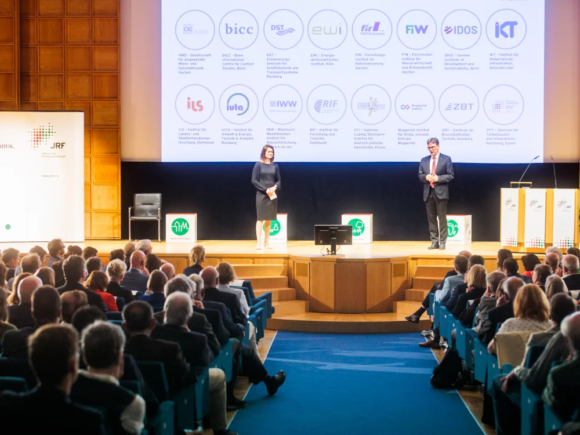
Jetzt anmelden zur JRF-Jahresfeier 2025
Am Montag, dem 7. April 2025, lädt die Johannes-Rau-Forschungsgemeinschaft (JRF) Mitglieder, Förder*innen und Interessierte zu ihrer Jahresfeier nach Düsseldorf ein. Bei der Veranstaltung unter Beteiligung von NRW-Wissenschaftsministerin Ina Brandes wirft der Vorstand zunächst einen Blick auf das vergangene 10-jährige Jubiläumsjahr. Die Leitthemensprecher*innen geben einen kurzen Einblick in die thematischen Schwerpunkte der JRF. Das JRF-Kuratorium verleiht den JRF-Dissertationspreis 2025. Anschließend wird beim Empfang zum Austausch, Vernetzen und Verweilen eingeladen. Das ILS ist Gründungsmitglied der Forschungsgemeinschaft. Die Anmeldung ist ab sofort möglich. Mehr…
Neujahrsempfang Forum Stadtbaukultur
Im Gartensaal des Baukunstarchivs findet am 27. Januar 2025 um 18.30 Uhr der Neujahrsempfang des Forums Stadtbaukultur statt. Das Thema des Abends lautet: Infrastruktur der Zukunft – Zukunft der Infrastruktur. Da die Teilnehmerzahl begrenzt ist, wird um Anmeldung gebeten bis zum 24.01.2025. Mehr…
Forum Stadtbaukultur Dortmund
„Kunst in offenen und geschlossenen Räumen“ ist das Thema des nächsten Forums Stadtbaukultur Dortmund. Am Montag, den 02. Dezember um 19.00 Uhr, werden im Gartensaal des Baukunstarchivs NRW zwei Künstler das Spannungsfeld Kunst und Architektur in ihren Vorträgen beleuchten. Um Anmeldung wird bis zum 29.11.2024 gebeten. Mehr…
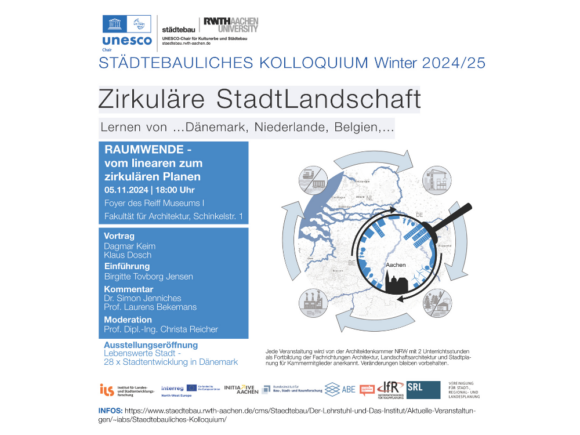
Zirkuläre StadtLandschaft – Lernen von … Dänemark, Niederlande, Belgien, …
Die diesjährige Winterausgabe des Städtebaulichen Kolloquiums zieht Lehren zum räumlichen Umgang unserer europäischen Nachbarn beim Thema Zirkuläres Wirtschaften. Die zweite Veranstaltung des dreiteiligen Kolloquiums beschäftigt sich mit dem Thema „KLIMASCHUTZ – vom Mehrwert der Zirkularität“ und findet am 10. Dezember um 18:00 im Foyer des Reiff Museums in Aachen statt. ILS-Wissenschaftlerin Ann-Kristin Steines referiert dort zu „Innovativen Systemen der kreislaufbasierten Agrarproduktion“. Mehr…