Understanding Urban Change, Shaping Urban Change
The process of urbanisation in the early 21st century is enormously dynamic: Urban spaces emerge, grow and change, their transformation takes many forms and is increasingly discontinuous and disparate. A better understanding of these processes is a central concern for the spatial urban researchers at the ILS. We investigate the various dimensions of urban change at different levels of scale and in international comparison. In active dialogue with practitioners, policy-makers and societal stakeholders, we gain important insights from this for the sustainable transformation and design of urban spaces.
We have these main research interests.
The process of urbanisation in the early 21st century is enormously dynamic: Urban spaces emerge, grow and change, their transformation takes many forms and is increasingly discontinuous and disparate. A better understanding of these processes is a central concern for the spatial urban researchers at the ILS. We investigate the various dimensions of urban change at different levels of scale and in international comparison. In active dialogue with practitioners, policy-makers and societal stakeholders, we gain important insights from this for the sustainable transformation and design of urban spaces.
We have three main research interests.
News
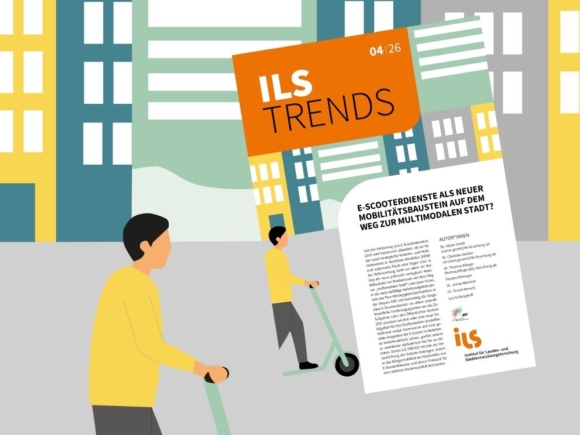
ILS-TRENDS 04/26: E-Scooterdienste als neuer Mobilitätsbaustein auf dem Weg zur multimodalen Stadt?
Seit der Einführung von E-Scooterdiensten wird kontrovers diskutiert, ob sie die sozial-ökologische Verkehrs- und Mobilitätswende unterstützen oder behindern. Befürworter*innen sehen in ihnen einen flexiblen Mobilitätsbaustein auf dem Weg zur multimodalen Stadt, während Kritiker*innen befürchten, dass sie umweltfreundliche Verkehrsarten verdrängen oder neue Unfallrisiken schaffen. Entsprechend reichen die kommunalen Strategien von gezielter Integration bis hin zu restriktiven Maßnahmen. Dieses ILS-TRENDS möchte zur Versachlichung der Debatte beitragen, indem es die Alltagsmobilität der Nutzenden von E-Scooterdiensten und deren Potenzial für eine stärkere Multimodalität betrachtet. Zum Heft

Stellenausschreibung: Studentische Unterstützung gesucht
Die Forschungsgruppe Mobilität und Raum des ILS sucht ab dem 01.07.2026 oder später studentische Unterstützung im Projekt „ways2work“. Die Stelle hat einen Umfang von 8 Wochenstunden und ist zunächst befristet bis zum 31.12.2026, eine Verlängerung wird angestrebt. Das vom Ministerium für Umwelt, Naturschutz und Verkehr des Landes Nordrhein-Westfalen geförderte Projekt „ways2work“ befasst sich mit Fragen nachhaltiger Mobilität im Kontext von Arbeits- und Dienstwegen und entwickelt gemeinsam mit Kommunen, Betrieben und weiteren Akteurinnen und Akteuren praxisnahe Lösungen für eine zukunftsfähige Mobilität in Gewerbegebieten. Mehr…

JRF-WissensLunch: „Teilhabe stärken: Ankunftsquartiere als Schlüsselräume kommunaler Integrations- und Stadtentwicklungspolitik“
ILS-Wissenschaftlerin Dr. Isabel Ramos Lobato wird am 26. Juni 2026 beim JRF-WissensLunch einen Vortrag halten. Darin richtet sie den Blick auf sogenannte Ankunftsquartiere als Orte, an denen Zugänge zu Wohnen, Bildung, Arbeit, Beratung und sozialen Netzwerken im Alltag eröffnet, aber auch begrenzt werden. Auf Grundlage mehrjähriger transdisziplinärer Forschung wird diskutiert, wie Ankunftsquartiere entstehen, welche Rolle sie für lokale Teilhabe spielen und was es braucht, um sie als Schlüsselräume kommunaler Integrations- und Stadtentwicklungspolitik zu stärken. Mehr…
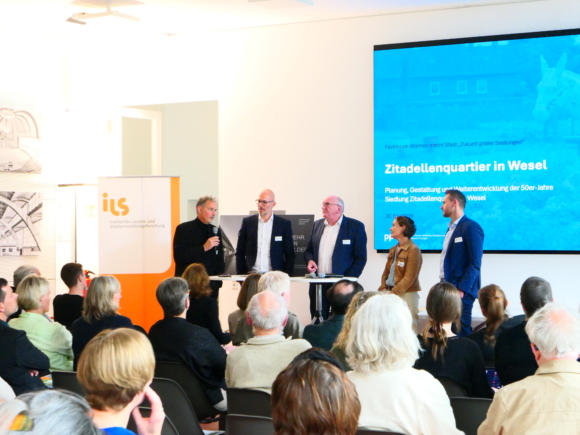
Nachbericht zum Fachforum „Wohnen macht Stadt“
Am 20. Mai 2026 hatte das ILS gemeinsam mit dem MHKBD zum Fachforum „Wohnen macht Stadt“ in das Baukunstarchiv NRW nach Dortmund eingeladen. Im Rahmen der Veranstaltung tauschten sich rund 75 Teilnehmende intensiv über die Entwicklung großer Siedlungen in Nordrhein-Westfalen aus, mit Blick auf wissenschaftliche Erkenntnisse zum aktuellen Bestand sowie auf realisierte Projekte, Schlüsselfaktoren und Herausforderungen zur Weiterentwicklung großer Siedlungen. Ein Schwerpunkt lag zudem in der Frage, welche Rolle Kooperationen zwischen Kommunen, Wohnungsunternehmen und zivilgesellschaftlichen Akteuren sowie die Kombination von Programmen aus der Städtebau- und Wohnraumförderung spielen. Mehr…
Ernährungswende vom Acker bis auf den Teller: Newsletter aus dem Projekt FoodConnectRuhr
Unser Projekt FoodConnectRuhr informiert ab sofort mit einem Newsletter über das Projekt und seine Fortschritte. Vier Ausgaben pro Jahr sind geplant. FoodConnectRuhr baut ein Netzwerk entlang der gesamten regionalen Lebensmittel-Wertschöpfungskette vom Acker bis auf den Teller in Dortmund und der Region auf. Die Anmeldung zum Newsletter ist auf der Projektseite möglich.
Publications
In Aufstellung befindliche Ziele der Raumordnung und ihre Vorwirkungen
ILS-Wissenschaftler Jonas Marschall hat in der Neuen Zeitschrift für Verwaltungsrecht einen Beitrag veröffentlicht. Der Planungsdruck in der Raumordnung ist in Anbetracht ihrer zentralen Bedeutung für räumliche Transformationsprozesse und der Vielzahl an neuen gesetzlichen Vorgaben hoch. Die auf mittelfristige Zeiträume ausgelegten Raumordnungspläne müssen kurzfristig an aktuelle Anforderungen angepasst werden. Bereits im Verfahren kommen den vorgesehenen und den in Aufstellung befindlichen Zielen der Raumordnung Wirkungen mit Bedeutung für die Planungs- und Genehmigungspraxis zu. Schon vor dem formellen Abschluss des Planungsverfahrens können künftige Ziele der Raumordnung die Zulassung von Vorhaben begünstigen oder eine Grundlage für die befristete Untersagung von Vorhaben sein. Dem überragenden öffentlichen Interesse am Ausbau der erneuerbaren Energien wird dabei in Bezug auf den Windenergieausbau durch Sonderregelungen Rechnung getragen. Hinweis: Der Beitrag wurde vor Einführung der Neuregelung in § 9 Abs. 1a BImSchG zur Planungssicherung für Windenergiegebiete verfasst und angenommen. Die veränderte Rechtslage bezieht sich nur auf die Aussagen über Windenergieprojekte, ansonsten sind die Ausführungen des Beitrags weiterhin aktuell! Weitere aktuelle Fachpublikationen finden Sie hier.

Unpacking mobility cultures: a review of conceptual definitions and empirical approaches
In an international collaboration with two colleagues from the Technical University of Denmark, ILS researcher Thomas Klinger has published an article on the social science concept of Mobility Culture in the journal “Transport Reviews”. Based on a systematic literature review, a structured comparison of theoretical and empirical work on the concept of Mobility Culture was carried out. As a result, a lack of conceptual clarity in the Mobility Culture discourse was identified. https://doi.org/10.1080/01441647.2025.2454414. Further current selected papers can be found here.

Walkability der Stadt Regensburg – eine Mixed-methods-Untersuchung mittels QGIS und Walk Audits
Together with other researchers, Dr. Christian Gerten from the “Geoinformation and Monitoring” unit has published an article in the journal “Prävention und Gesundheitsförderung”. The article presents the results of a study on the current walkability and pedestrian friendliness in the city of Regensburg and discusses and derives options for improving walkability. https://doi.org/10.1007/s11553-024-01165-5. Further current selected papers can be found here.

Disentangling cultural ecosystem services co-production in urban green spaces through social media reviews
Kathrin Specht from the research group “Spatial Planning and Urban Design” and other colleagues have published an article in the journal “Ecosystem Services”. It is about an innovative method of using textual Google Maps reviews to assess co-production of cultural ecosystem services. Findings are, among other things, that aesthetic experiences, active interactions, and passive interactions are interdependent in user perceptions, and that low-intensity, experience-oriented recreational activities show tangible and material links to natural and built environments. https://doi.org/10.1016/j.ecoser.2024.101675. Further current selected papers can be found here.
Assessing the suitability of settlement delineations for monitoring infilling: A web- and GIS-based expert evaluation approach
ILS scientist Sebastian Eichhorn and other colleagues have published an article in the journal “Environment and Planning B”. The study investigates the suitability of different geospatial datasets and methods for delineating settlement areas and assessing infill housing, an aspect crucial for urban planning and development. Quantitative and qualitative analyses reveal notable variations in the classification of settlement areas and infilling across datasets, and underscore the need for a nuanced approach to conceptualising densification measurement, particularly in defining urban boundaries. https://doi.org/10.1177/23998083241308407. Further current selected papers can be found here.
Events

20 Jahre Forum Stadtbaukultur
Das „Forum Stadtbaukultur“ widmet sich in Dortmund seit 20 Jahren stadtentwicklungspolitischen Themen. Zum Jubiläum erfolgt am 28. August ab 18.30 Uhr eine kurze thematische Rückschau wesentlicher Inhalte der beiden vergangenen Dekaden. Gleichzeitig geht es auch um relevante Projekte aktueller Stadtplanung. Die Anmeldung ist bis zum 24. August möglich. Das ILS ist Teil des Trägerkreises.
Mehr…

Jetzt anmelden zum Raumwissenschaftlichen Kolloquium 2023 – Raumentwicklung und Digitalisierung: Wechselwirkungen, Trends und Entwicklungspfade
Die intensiven Wechselwirkungen von Digitalisierung und Raumentwicklung stehen im Mittelpunkt des Raumwissenschaftlichen Kolloquiums 2023 (RWK2023), einer Veranstaltung des Leibniz-Forschungsnetzwerks “Räumliches Wissen für Gesellschaft und Umwelt – Leibniz R”. Erstmals findet das RWK an zwei Tagen statt: Der 4. Juli richtet sich als Online-Veranstaltung an ein internationales wissenschaftliches Publikum. Tag 2 widmet sich am 5. Juli als Präsenzveranstaltung in Berlin dem anwendungsorientierten Austausch zwischen Wissenschaft, Politik und Praxis. Die Anmeldung zur Veranstaltung ist bis 25. Juni möglich. Mehr…

Forum StadtBauKultur: Stadt + Landschaft morgen – sehen, denken, entwerfen
Unter dem Motto „Stadt + Landschaft morgen – sehen, denken, entwerfen“ diskutiert das Forum StadtBauKultur am Montag, 26. Juni, um 19 Uhr im Baukunstarchiv NRW. Im interdisziplinären Kontext des ‚Dortmunder Modells’ an der Fakultät Architektur und Bauingenieurwesen der TU Dortmund fragt die Veranstaltung nach Konstanten, Erweiterungen und Paradigmenwechsel für das architektonische Metier. Die Anmeldung ist bis zum 22. Juni möglich. Zur Internetseite des Forums
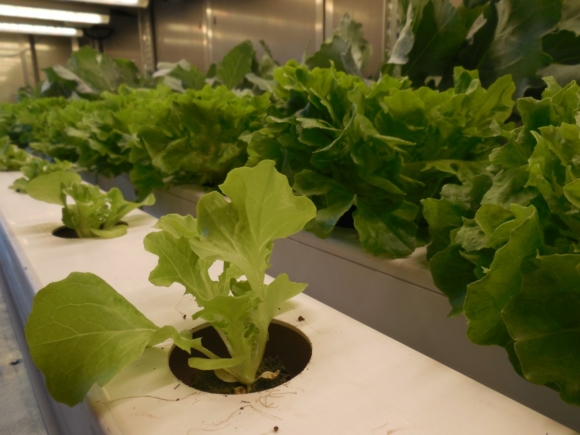
Wissenschaft zum Anfassen: SUSKULT auf dem Umweltmarkt in Duisburg
Gemüse von der Kläranlage? Das Verbundprojekt SUSKULT erforscht ein neuartiges Agrarsystem, bei dem für die Lebensmittelproduktion notwendige Ressourcen von einer Kläranlage verwendet werden. Das Projekt präsentiert sich am 03. Juni mit einem Stand beim Umweltmarkt in Duisburg. Besucher*innen können sich dort über die nachhaltige urbane Lebensmittelproduktion informieren. Für Kinder gibt es eine Mitmachaktion. Mehr…
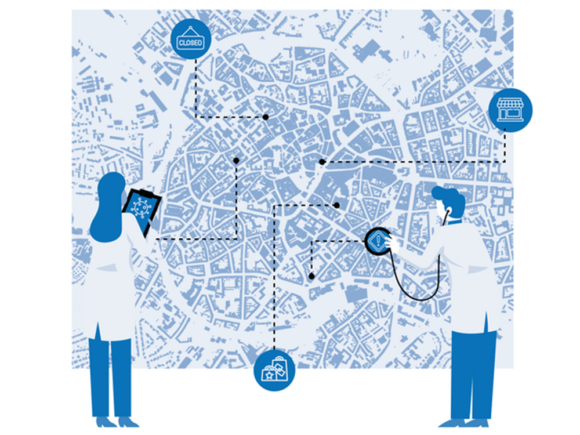
Patient*in Innenstadt: Städtebauliches Kolloquium in Aachen
Am 16. Mai 2023 beginnt um 18:00 Uhr der zweite Teil des Städtebaulichen Kolloquium zum Thema „Patient*in Innenstadt“ im Foyer des Reiff Museums in Aachen. Die Veranstaltung steht unter der Überschrift „Frischer Wind für die Innenstädte“ und wird von ILS-Direktor Prof. Dr. Stefan Siedentop moderiert. Mehr…