Understanding Urban Change, Shaping Urban Change
The process of urbanisation in the early 21st century is enormously dynamic: Urban spaces emerge, grow and change, their transformation takes many forms and is increasingly discontinuous and disparate. A better understanding of these processes is a central concern for the spatial urban researchers at the ILS. We investigate the various dimensions of urban change at different levels of scale and in international comparison. In active dialogue with practitioners, policy-makers and societal stakeholders, we gain important insights from this for the sustainable transformation and design of urban spaces.
We have these main research interests.
The process of urbanisation in the early 21st century is enormously dynamic: Urban spaces emerge, grow and change, their transformation takes many forms and is increasingly discontinuous and disparate. A better understanding of these processes is a central concern for the spatial urban researchers at the ILS. We investigate the various dimensions of urban change at different levels of scale and in international comparison. In active dialogue with practitioners, policy-makers and societal stakeholders, we gain important insights from this for the sustainable transformation and design of urban spaces.
We have three main research interests.
News
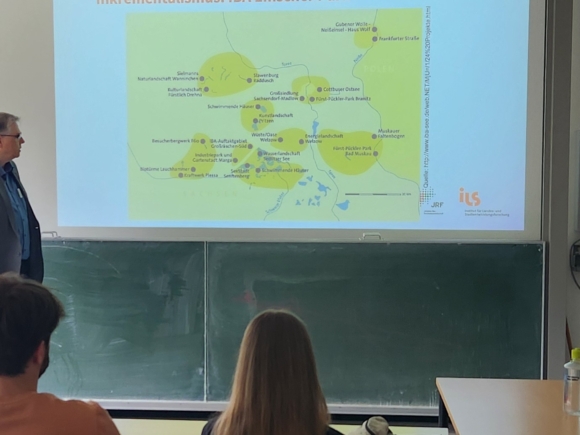
Einladung nach Göttingen: Prof. Dr. Thomas Weith zu Nachhaltigem Land- und Ressourcenmanagement
Der Umgang mit Land bleibt aus gesellschaftlicher als auch wissenschaftlicher Sicht eines der zentralen Bausteine für eine nachhaltigkeitsorientierte räumliche Entwicklung. Mit einem Vortrag am 10. Juni 2026 an der Universität Göttingen zum Thema „Nachhaltiges Land- und Ressourcenmanagement“ konnte Prof. Dr. Thomas Weith vom ILS sowohl aktuelle Problemwahrnehmungen als auch Wirkungszusammenhänge beleuchten. Mehr…
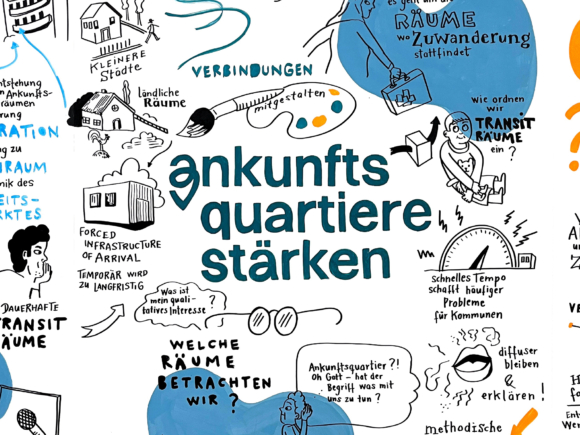
Pressemitteilung – Ankommen als kommunale Aufgabe: Wie Ankunftsquartiere Teilhabe stärken können
Migration prägt längst den Alltag von Städten und Gemeinden in ganz Deutschland. Kommunen stehen vor der Aufgabe, Ankommen und Teilhabe unter zunehmend dynamischen Bedingungen zu gestalten. Welche Rolle dabei sogenannte Ankunftsquartiere spielen und wie Kommunen diese gezielt stärken können, zeigt das jetzt erschienene Booklet „Was Ankunftsquartiere stark macht“, das im Projekt „Teilhabe in neuen Ankunftsquartieren stärken“ entstanden ist. Zur Pressemitteilung
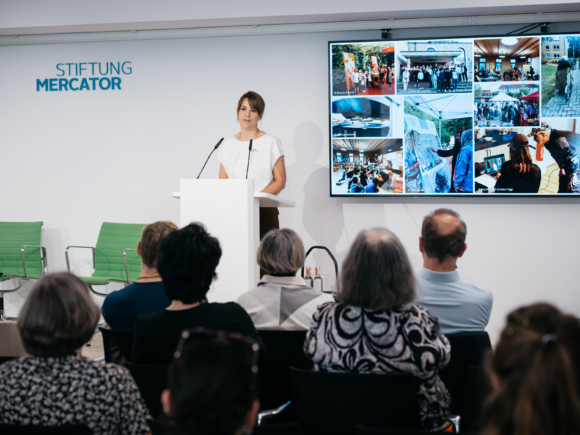
Ankunftsquartiere stärken: Wie können Teilhabe und Zusammenhalt vor Ort gelingen?
Diese Frage stand im Zentrum der Abschlusstagung „Von der Ankunft zur Teilhabe“ gestern in Essen. Nach drei Jahren Forschungs-Praxis-Projekt „Teilhabe in ,neuen‘ Ankunftsquartieren stärken“ kamen Perspektiven aus Wissenschaft, Stadtverwaltung, Zivilgesellschaft, Politik und Wohnungswirtschaft zusammen. Das Projekt hat gezeigt: Ankunftsquartiere sind weit mehr als Orte besonderer Herausforderungen. Sie eröffnen Zugänge zu Wohnraum, Beratung, Bildung, sozialen Netzwerken und alltagspraktischem Wissen. Damit leisten sie eine wichtige Funktion für die gesamte Stadtgesellschaft. Zum Bericht
Job advertisement: Scientifc Director of the ILS
In conjunction with TU Dortmund University, we are looking for a person with a proven academic track record to lead the ILS—Institute for Regional and Urban Development Research. The position is linked to the W3 professorship in “Sustainable Real Estate and Land Development” at TU Dortmund University. We are seeking a leader with internationally recognized research expertise who will shape the strategic development of the ILS and drive the sustainable transformation of cities and regions. The application deadline is August 12, 2026. Further information on the requirements and the application process can be found in the job advertisement.
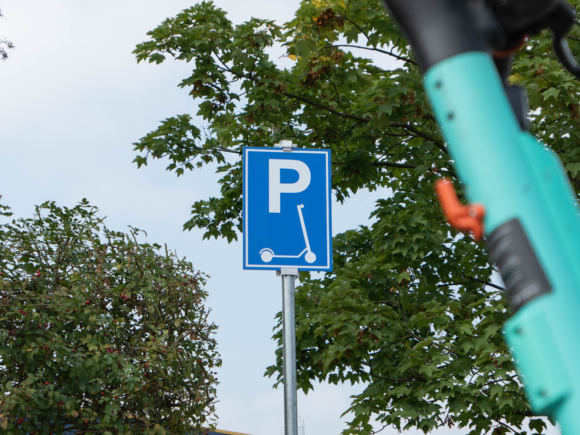
Pressemitteilung – Mehr als nur Fahrspaß: Welche Rolle E-Scooter für die Mobilitätswende spielen können
Der eine ärgert sich über querstehende E-Scooter auf dem Gehweg, die andere sieht in ihnen einen wichtigen Beitrag zur Mobilitätswende. Die Debatte um E-Scooterdienste in deutschen Städten wird seit ihrer Einführung kontrovers geführt. Wissenschaftler*innen des ILS – Instituts für Landes- und Stadtentwicklungsforschung in Dortmund haben die Diskussion nun auf eine empirische Grundlage gestellt. Ihre Ergebnisse zur Alltagsmobilität der Nutzenden und das Potenzial der Dienste für eine stärkere Multimodalität sind jetzt als ILS-TRENDS „E-Scooterdienste als neuer Mobilitätsbaustein auf dem Weg zur multimodalen Stadt?“ erschienen. Zur Pressemitteilung
Publications

Die räumliche Steuerung von Photovoltaik-Freiflächenanlagen
Jonas Marschall aus der Forschungsgruppe „Raumbezogene Planung und Städtebau“ hat einen Aufsatz in der Zeitschrift für Umweltrecht veröffentlicht. Darin geht es um die räumliche Steuerung von Photovoltaik-Freiflächenanlagen. https://doi.org/10.5771/9783748954552-43 Weitere aktuelle Fachpublikationen finden Sie hier.
“I’d rather live in Munich, but my job in Stuttgart is more attractive”. The role of corporate ties in decisions to maintain multi-local living arrangements.
The ILS researchers Lisa Garde and Cornelia Tippel have published an article in the special issue Multilocalism in the Fuori Luogo Journal of Sociology of Territory, Tourism, Technology. In it, they examined the company loyalty of employees with multiple residences. The aim was to analyse the company loyalty of multinational employees working in Stuttgart (Germany) and to find out how such ties influence multinational coexistence. https://doi.org/10.6093/2723-9608/9444. Further current selected papers can be found here.

Analysing the determinants of perceived walkability, and its effects on walking
Anna-Lena van der Vlugt, Janina Welsch, Noriko Otsuka – scientists from the research group “Mobility and Space” – have published an article in the journal “Transportation Research Part A: Policy and Practice”. It presents the results of one of the first transportation studies analysing the determinants of perceived walkability and how it affects walking behaviour. The results show that perceived walkability is mainly affected by walking attitudes and that perceived walkability has an impact on walking frequency, walking distance and walking duration. It is therefore important for policy makers and urban planners to increase perceived walkability levels to stimulate walking, thereby improving physical activity and the liveability of neighbourhoods. For further studies, it is also suggested to analyse the relationship between perceived and objectively measured walkability in greater detail and to investigate the applied SPWS (Short Perceived Walkability Scale; compact scale for measuring perceived walkability), its determinants and the results of walking in other contexts as well. https://doi.org/10.1016/j.tra.2025.104498. Further current selected papers can be found here.

Walking travel satisfaction – A comparison of three European cities
ILS researchers Janina Welsch, Noriko Otsuka and Anna-Lena van der Vlugt have published an article in the “Journal of Urban Mobility”. The study examined and compared walking satisfaction in three case study cities in Europe: Dortmund, Genoa, and Gothenburg as part of the EU project „WalkUrban“. By analyzing household survey data, levels and determinants of walking satisfaction within and between the cities were explored, using the Satisfaction with Travel Scale to measure walking satisfaction. The results show that levels of walking satisfaction differ between the cities and also in terms of several sub-dimensions. However, the findings expand the existing body of knowledge about determinants of walking satisfaction in different urban settings and provides vital insights for urban planning and policies determined to foster walking-friendly and satisfactory local urban environments. https://doi.org/10.1016/j.urbmob.2025.100109. Further current selected papers can be found here.

Gestión integrada de los recursos hídricos por organismos de cuencas hidrográficas: comparación de los casos de estudio de Tárcoles y Reventazón en Costa Rica – Integrated water resources management through river basin organizations: comparing the case studies of Tárcoles and Reventazón in Costa Rica
Barbara Schröter, ILS researcher in the research group Spatial Planning and Urban Design, has published a paper in the journal Revista de Ciencas Ambientales – Tropical Journal of Environmental Sciences together with colleagues from the University of Costa Rica. They compare the institutional design of the river basin organisation of Costa Rica‘s two largest rivers, the Río Grande de Tárcoles and the Río Reventazón. Their strength and weaknesses are discussed and further implications for integrated water resources management in Costa Rica are discovered.
https://doi.org/10.15359/rca.59-2.8. Further current selected papers can be found here.
Events
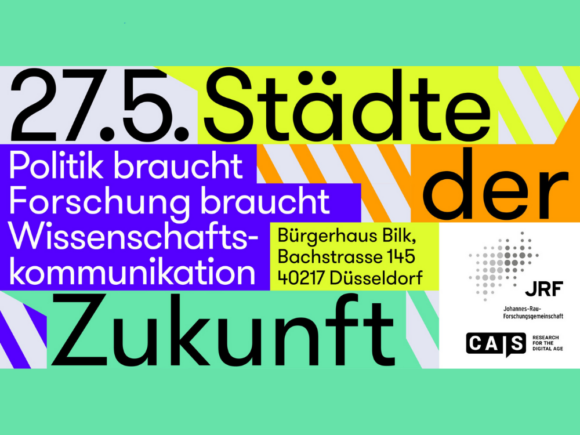
Politik braucht Forschung braucht Wissenschaftskommunikation
Welchen Mehrwert kann die Wissenschaftskommunikation für eine evidenzbasierte, innovative und zukunftsgewandte Gestaltung unserer Zukunft bieten? Dazu diskutieren bei der Veranstaltung „Politik braucht Forschung braucht Wissenschaftskommunikation” am 27. Mai Vertreter*innen aus Politik und Wissenschaft im Bürgerhaus Bilk. Die Veranstaltung wird organisiert von der Johannes-Rau-Forschungsgemeinschaft (JRF) und dem Center for Advanced Internet Studies (CAIS). Schirmherrin der Veranstaltung ist Ina Brandes, Ministerin für Kultur und Wissenschaft des Landes Nordrhein-Westfalen. Ann-Christin Kleinmanns und Theresa von Bischopink (beide ILS) geben Einblicke in die Wissenschaftskommunikation des ILS. Zur Anmeldung
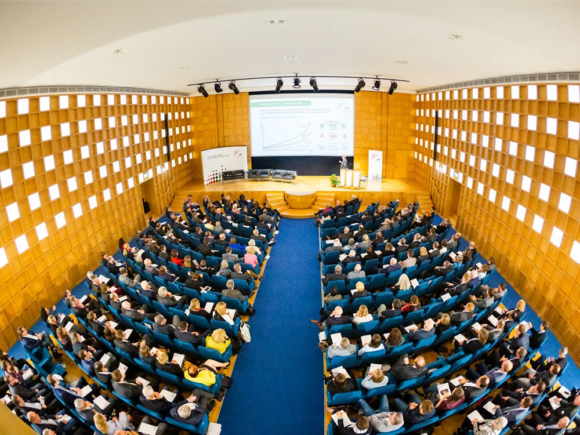
Jubiläumsfeier “10 Jahre Johannes-Rau-Forschungsgemeinschaft”
Die Johannes-Rau-Forschungsgemeinschaft (JRF) feiert im Jahr 2024 ihr 10-jähriges Bestehen. Am 8. April 2024 ab 14 Uhr (Ausstellungsbeginn), bzw. 15 Uhr (Veranstaltungsbeginn) sind Freunde, Förderer, Wegbegleiter*innen und die interessierte Öffentlichkeit eingeladen, das 10-jährige Jubiläum der JRF mit einer Festveranstaltung in der Nordrhein-Westfälischen Akademie der Wissenschaften und der Künste in Düsseldorf zusammen mit der Ministerin für Kultur und Wissenschaft des Landes NRW, Ina Brandes, und vielen anderen zu feiern. Das ILS ist Gründungsmitglied der Forschungsgemeinschaft. Die Anmeldung ist ab sofort möglich. Mehr…
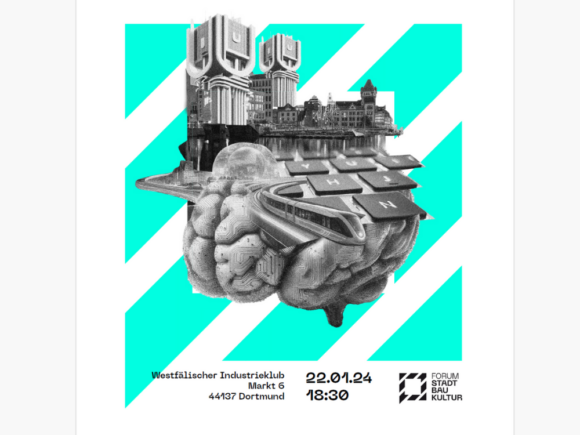
Forum StadtBauKultur: Künstliche Intelligenz in der Planung – Chance oder Bedrohung?
Das Forum StadtBauKultur lädt am Montag, 22. Januar um 18.30 Uhr, zum Neujahrsempfang in den Westfälischen Industrieklub in Dortmund ein. Thema ist „Künstliche Intelligenz in der Planung – Chance oder Bedrohung?“. Zur Internetseite des Forums
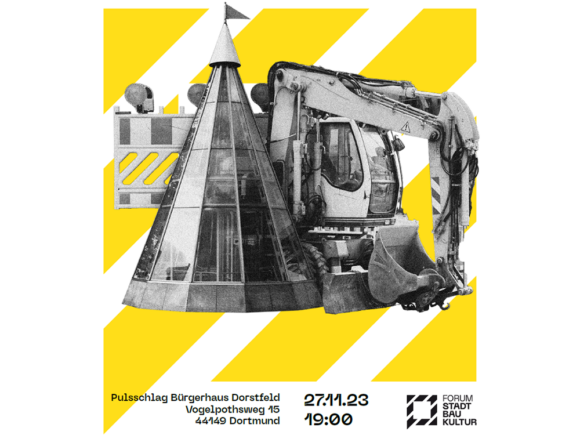
Forum Stadtbaukultur
Am 27. November findet um 19 Uhr die nächste Veranstaltung des Forums Stadtbaukultur im Pulsschlag Bürgerhaus Dorstfeld, Vogelpothsweg 15, statt. Thema ist „Bauen im Bestand“. Mit dieser Veranstaltung knüpft das Forum Stadtbaukultur Dortmund an den Apriltermin dieses Jahres an. Damals wurde bereits die in Verbindung mit den Zielen und Erwartungen der Bundesregierung ungebrochene Bautätigkeit kritisch hinterfragt. Es konnte herausgestellt werden, dass das Bauen im Bestand enorme Potenziale bietet, die es zu heben gilt. Zur Anmeldung
Städtebauliches Kolloquium WiSe 2023/2024
Am 28.11.2023, 19.12.2023 und 16.01.2024 findet wieder das Städtebauliche Kolloquium jeweils ab 18 Uhr im Rudolf-Chaudoire-Pavillon an der TU Dortmund statt. Thema ist das Lernen in 1:1 Situation im Rahmen von Reallaboren. Mehr…